
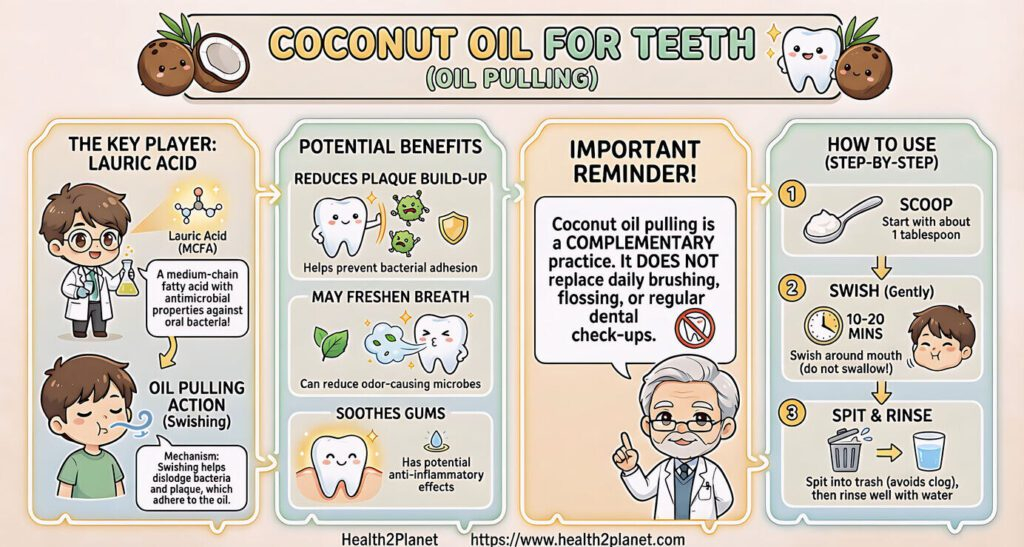
In an age of state-of-the-art dental care, we sometimes forget that the simplest dental tools can deliver stunning results. At the forefront of this trend, the practice of swishing coconut oil for teeth — known as “oil pulling” in Ayurvedic medicine — has expanded far beyond its original niche and entered discussions in general dentistry and pop culture. Though it may simply seem like biohacking or the next wellness fad, having coconut oil encounter the oral microbiome has potential as a highly effective – and free of artificial chemicals – alternative to store-bought mouthwash.
The Science of Oil Pulling: Why Coconut Oil?
This is something anyone can benefit from, helping lower their toxic load—oil pulling—3000 Years of Ayurvedic Holistic Health. Oil pulling is a traditional Ayurvedic remedy dating back more than 3,000 years, intended to keep the mouth healthy and disease-free. Traditionally cooked in sesame or sunflower oil, a tablespoon of cold-pressed organic coconut or sesame oil will do just as well. But in modern recipes, coconut oil for teeth is the predominant ingredient. The reason coconut oil was considered excellent for teeth was not pulled out of thin air – some chemistry and substance support it.
It is packed full of medium-chain fatty acids (MCFAs), namely Lauric Acid, which accounts for 50% of its composition. Lauric acid is well known for its antibacterial and anti-inflammatory properties. Coconut oil, unlike other oils, chemically blocks saliva from causing hair damage. This process, known as saponification, occurs when one swishes the oil in one’s mouth. In effect, the oil becomes a mild soap. This soap-like structure acts as a cleanser, emulsifying oil and capturing bacteria, toxins, and dirt.
The mouth is home to billions of bacteria, some good and some bad. The worst oral pathogen is Streptococcus mutans, which causes plaque buildup, gingivitis, and cavities. The bacteria are wrapped in a fatty (lipid) membrane. “Like dissolves like,” and the fatty acids from the coconut oil are drawn to the fatty membrane of these bacteria. As the oil is swirled around, it becomes a magnet, picking up bacteria from nooks and crannies in the gums and teeth and holding them in suspension until the mouth is rinsed.
Coconut Oil for Teeth Benefits
When analyzing the coconut oil for teeth benefits, the scope goes beyond simple cleaning. Studies and anecdotal evidence point to three significant areas of progress: cavity prevention, gum health, and fresh breath.
-
Reduction of Plaque and Gingivitis
Plaque, a sticky film of bacteria, is the cause of gingivitis. Oil pulling vs chlorhexidine (prescription mouthwash). Research has found that oil pulling is far superior to Chlorhexidine in reducing plaque-induced gingivitis. When you lower the number of bacteria in your mouth, your immune response (and inflammation) will calm down, and you will have healthier, less-sensitive gums.
-
Combatting Halitosis (Bad Breath)
Despite exceptions, halitosis is seldom a single ailment but indicative of an excess of bacterial growth or of unhealthy elements trapped between the teeth. Traditional mouthwashes often contain alcohol, which can kill bacteria but also dry out the mouth and, in some cases, inadvertently increase bacterial growth later. Coconut oil kills the bacteria that produce Volatile Sulfur Compounds (VSCs) without causing abnormal saliva levels or desiccating mucous membranes.
-
Prevention of Tooth Decay
Coconut oil destroys Streptococcus mutans and Lactobacillus, thereby disrupting their metabolism and causing acid byproducts that demineralize your enamel. It does not “heal” cavities that have already formed, but it does promote conditions that inhibit new cavities from forming.
Coconut Oil for Teeth Whitening: Managing Expectations
One of the most popular search terms on this topic is “coconut oil for teeth whitening.” As our society is obsessed with the Hollywood smile, it feels like everyone, everywhere, is on a quest for natural alternatives to chemical bleaches, such as hydrogen peroxide, which can leave your tooth enamel feeling sensitive.
It is essential to understand the difference between bleaching and brightening. Coconut oil does not bleach your teeth. It does not alter the natural hue of tooth enamel. But it works excellently on extrinsic stains—coffee, tea, and wine. For years of sipping coffee, tea, and wine, or snacking on richly pigmented berries, all leave a residue on your enamel.
The oil’s viscosity allows it to function as an all-natural exfoliant. It removes surface stains as you swish it around your teeth. In addition, scraping off the plaque layer (generally yellow or white) returns the enamel’s original whiteness.
Whenever Coconut Oil for teeth Before and After pictures are looked at, a gradual, natural process is often observed rather than a miraculous overnight job. Users often report that their teeth appear cleaner and shinier, even after just 2 to 3 weeks of consistent use.
How to Use Coconut Oil for Teeth
To maximize benefits and ensure safety, the technique must be precise. Understanding how to use coconut oil for teeth is simple, but adherence to the protocol is vital for results.
Step 1: Preparation
This is best done on an empty stomach in the morning, just before drinking pure water or brushing your teeth. This means the overnight bacterial load is addressed straight away.
Step 2: The Amount
You can use one tablespoon of coconut oil. That solid oil can be chewed a little until it becomes liquid. Be careful not to get too much, as saliva produced in the mouth after taking will double your liquid intake.
Step 3: Swishing
This is the core mechanism. Squish the oil around the mouth and between your teeth. It should be a tender movement — vigorous swishing can fatigue the jaw. The oil should spread across and cover the entire mouth — gums, teeth, and tongue.
Step 4: Duration
When it comes to coconut oil for teeth how long, the consensus is 15-20 minutes. It takes this long for the oil to work its way into the plaque and for saponification to become fully involved. If 20 minutes is not manageable at first, beginners can start with just 5 minutes and work up to 20.
Step 5: Disposal
Do not spit it in the sink or toilet. As oil cools, it can turn into a solid and wreak havoc on plumbing pipes. Never spit the oil out into a sink or any other non-trash receptacle.
Step 6: Rinse and Brush
After spitting, rinse the mouth thoroughly with warm water (saltwater for even better results) to remove any oil residue. Follow this with regular toothbrushing to eliminate any remaining bacteria.
Selecting the Product: Best Coconut Oil for Teeth
Some oils are better than others. Consumers searching for the best coconut oil for teeth need to get past the marketing hype and read the label.
-
Unrefined vs. Refined
The best option is always unrefined/virgin/extra-virgin coconut oil. Processed coconut oils are frequently bleached or deodorized using heat or chemicals, which can diminish the healthful lauric acid and antioxidants. Carefully pressed darkness oil preserves the grass’s life, thereby protecting its antibacterial properties.
-
Organic Certification
Use USDA Organic (or its equivalent) to avoid bringing pesticides or GMOs into the mouth.
-
Packaging
Glass jars are a better choice than plastic. Coconut oil can also leach harmful phenols from plastic containers, especially if heated during transport.
The price of coconut oil for teeth is significantly lower than that of chemical dental products. A good-quality, organic, 16-ounce jar of unrefined coconut oil typically runs between $10 and $15. Also, given the serving size of 1 drawer per day, one jar can last up to 2 months. While you may only notice a difference in your teeth after two weeks with traditional teeth-whitening strips (that sell for $30-$50) or specialized therapeutic mouthwashes, coconut oil can be added to anyone’s hygiene regimen without taking a big chunk out of the wallet.
Coconut Oil Pulling Dangers and Side Effects
For the most part, coconut oil pulling is safe. However, there are potential risks and side effects you should know about before using the method. Most “dangers” come from poor technique rather than from the oil.
-
Lipoid Pneumonia
This is the most serious, but very unusual, danger. If oil is aspirated (inhaled into the lungs), rather than swallowed or spit out, it can enter the lungs and cause inflammation. This is called lipoid pneumonia. To prevent this, do not tilt your head back excessively when gargling, or avoid gargling the oil into the throat. It should all take place in the front of the mouth.
-
Stomach Upset
It is not recommended to ingest the oil after swishing. By the time 20 minutes are up, the oil is teeming with bacteria and toxins it has pulled from the mouth. Ingesting this can cause an upset stomach and diarrhea. If you feel the need to swallow, it is best to spit a little out and then continue.
-
Jaw Fatigue and Muscle Stiffness
Twenty minutes of aggressive swishing can stress out the temporomandibular joint (TMJ). If someone feels pain, they can swish for a shorter time or use a lower-intensity setting.
-
Clogged Drains
As we have seen, the threat to household plumbing from environmental factors is real. Coconut oil solidifies into a mass resembling concrete in pipes, causing costly plumbing bills.
Comparison: Coconut Oil vs. Conventional Mouthwash
To really get the value proposition, let’s compare coconut oil with the usual alternative: alcohol-based mouthwash.
Classic mouthwashes operate under a “scorched earth” model. They kill 99.9% of bacteria. This sounds ideal, but the oral microbiome is complex and needs beneficial bacteria to jumpstart digestion and protect the throat. By destroying the entire population, alcohol mouthwashes can disrupt this balance. Moreover, as alcohol evaporates, it can dry out the mouth by inhibiting saliva flow, a natural defense against decay.
Coconut oil is selective. It homes in on the fatty membranes of harmful bacteria but is usually gentler on the soft tissues of our mouths. It does not desiccate the oral mucosa. But it is worth noting that, for advanced periodontal disease or to suppress infection after oral surgery, a dentist will often still recommend chlorhexidine. You have got coconut oil as a maintenance, but not necessarily as something that will cut or reverse aggressive periodontal disease.
Who Should Use Coconut Oil for Teeth?
This practice is suitable for everyone. It is particularly beneficial for:
People with Sensitive Teeth: Some people may find whitening strips too painful; for them, coconut oil can be a better option.
Pregnant Women: Gum health is famous for fluctuating during pregnancy, with many women experiencing bleeding gums or swelling due to a change in hormones (pregnancy gingivitis). Gum inflammation can also be treated with coconut oil, which contains no chemicals.
Individuals with Braces: Oil pulling can be messy, but it may help reduce bacteria that collect in and around brackets where brushes don’t reach. (Note: Consult an orthodontist first.)
Dry Mouth Sufferers: The mouthwash is formulated to relieve dry mouth symptoms.
Myths and Misconceptions
This routine is accessible to nearly ANYONE! It is particularly beneficial for:
It does not replace brushing and flossing. It is not a substitute for brushing and flossing. Oil pulling is a supportive treatment; do not believe it as medicine. Bacterial plaque control through mechanical tooth brushing and dental flossing remains the best approach to oral hygiene. Oil pulling should be considered a supplement rather than a substitute.
It does not fix cavities. When enamel is lost and a cavity forms, oil cannot grow your teeth back. A dental surgeon must fill the cavity.
It does not detox the whole body. Although oral health is associated with overall health (for example, heart disease or diabetes), claims that swishing oil in your mouth “pulls” toxins out of the liver and blood are not supported by science. The cleansing occurs in the mouth.
Implementing the Routine: A Realistic Timeline
There’s a lot of misinformation circulating about natural cures. We must point out what coconut oil cannot do.
Week 1: Many users experience a “cleaner” feeling in their mouth and fresher breath right away. The teeth might even feel “slick” to the tongue.
Week 2-3: It becomes evident that healthy gums have come around. Bleeding upon flossing may improve, and gums might look less red.
Week 4+: Tint gradually becomes visible. Cumulative stains from coffee or tea start lifting, and a brighter smile appears.
Conclusion
The resurgence of coconut oil for teeth is more than a fad; it is a return to a biologically sound method of oral hygiene that respects the body’s natural balance. By leveraging lauric acid’s antibacterial and anti-inflammatory properties, oil pulling is a highly effective method for reducing plaque, preventing gingivitis, and naturally whitening teeth without harsh bleaching products.
It’s not a replacement for a toothbrush and a dentist, but a considerable enhancement to everyday cleaning. When choosing the best coconut oil for teeth, opt for organic, unrefined varieties to maximize therapeutic benefits. However, users must remain aware of the dangers of coconut oil pulling, especially regarding appropriate disposal and the risk of aspiration, to keep this practice safe.
Ultimately, adding coconut oil to your oral care routine is an easy trade-off. It connects the age-old wisdom with the modern-day need for a healthy, white, and bacteria-free smile. Whether motivated by the low cost of coconut oil for teeth, a desire for natural whitening, or its health benefits, individuals who commit to daily swishing often find it an indispensable part of their morning ritual.